


PERSONAL INFORMATION
Enter your personal information
- This test contains 42 questions
- Time allowed: 1 hour
- Sections: Listening (20 questions), Reading (20 questions), Writing (2 questions)
- Answer ALL questions
- Write NO MORE THAN THREE WORDS where instructed
Listening Section 1
Listening Section 1 (Continued)
Listening Section 1 (Continued)
NATIONAL BUSINESS COLLEGE
ORIENTEERING CLUB: REGISTRATION FORM
| Given Name: | Ewa |
| Family Name: | |
| Nationality: | |
| Student Number: | |
| Present Course: | Advanced Programming |
| Years of Experience: | two years |
| Blood Type: | A+ |
| Day of Session: (9) |
|
| Home Phone No.: |
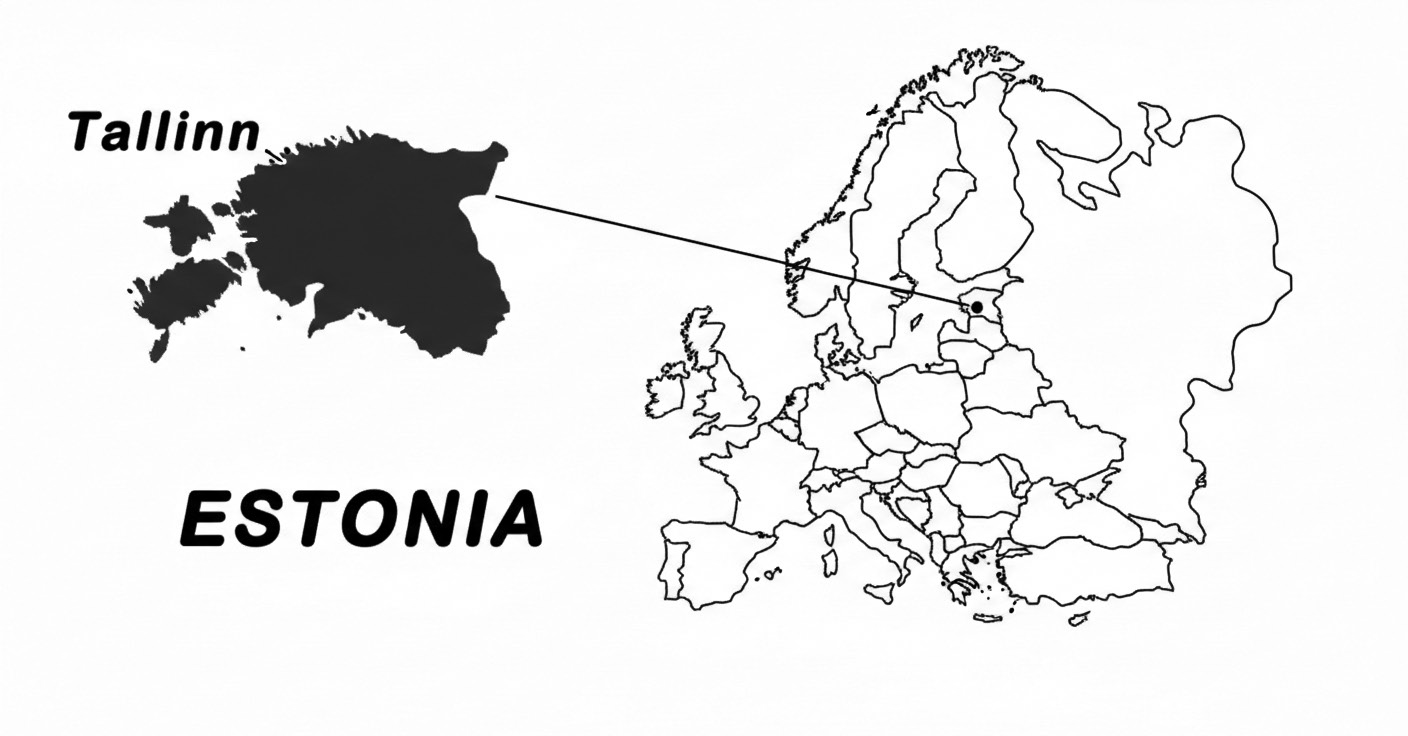
Listening Section 2: Estonia
Listening Section 2 (Continued)
Estonia is a small, flat country in Europe dotted with numerous islands and lakes. The manufacture of agricultural machinery and are the major industries, with and vegetables the main .
Once a part of Greater Russia, the nation is now an independent . Although many people speak Russian, the official language is Estonian. The weather in Estonia in summer is .
Reading Passage 1: The Big Sleep
The Big Sleep
The nature of sleep and the role it plays in our lives has long fascinated science and been the focus of many studies and a great deal of research.
Paragraph A
The benefit of receiving enough sleep is essential to our inner well-being. Not enough sleep, however, means that we lack the opportunity to restore ourselves physiologically, emotionally and cognitively. It affects our mood and can result in behaviour and performance problems. When we sleep, our bodies rest but our brains are active. Sleep lays the groundwork for a productive day ahead. Although most people benefit the most from eight hours of sleep each night, this is not always what they manage to achieve. Men get slightly less sleep than women during the week (6.7 hours/night vs. 7.0 hours/night), but have fewer sleep problems, according to recent Sleep in America polls conducted annually by the National Sleep Foundation (NSF).
Paragraph B
According to current scientific thought, the human body is pre-programmed for sleep. At nightfall, cells in the retina (a light sensitive membrane connected to the eye by the optic nerve) send a sleep signal to a cluster of nerve cells in the brain. These nerve cells are concentrated together in the suprachiasmatic nucleus (SCN) and are located in a part of the brain called the hypothalamus which helps regulate body temperature. The SCN is also known as the circadian clock. This biological "clock" relays the message to other parts of the brain which then signals the body that it is time to sleep. For instance, the pineal gland, also located in the hypothalamus, produces a substance called melatonin which lowers body temperature, and causes drowsiness.
Paragraph C
A great deal of the information we now know about sleep and the physiological changes it causes in the brain can be traced back to the invention of the electroencephalogram in the 1950s. This machine allowed scientists to record the feeble electric currents generated on the brain without opening the skull and to depict them graphically onto a strip of paper. Brain-wave function could be examined and scientists could thereby observe sleep from moment to moment. In the 1970s it became possible for scientists to make assumptions about the role that correct breathing plays during sleep with the development of the technology to measure respiration. It was here that science really began to understand the nature of sleep and the role it plays in people's lives.
Paragraph D
AS well as uncovering the physiological changes occurring during sleep, The New England Journal of Medicine reported that sleep concerns were > public health threat as serious as smoking and in the years since, more than 70 million Americans have medical researchers have linked sleep disorders with many life-threatening diseases. Even though sleeping problem, most cases go undiagnosed and untreated SO the true economic and sociological damage caused by these disorders is unknown although, the economic cost is conservatively estimated to be billions of dollarsyear in healthcare CoSts and lost productivity. Breathing problems during sleep represent by far the greatest proportion of sleep disorders and cause the most concern, with studies showing that between 50% and 80% of stroke and heart failure patients have breathing problems during sleep.
Paragraph E
Scientific studies have found that children who are identified as snorers or those who have poor sleeping patterns at around the age of four or five, scored lower than average in Intelligence Quotient (IQ) tests, not only during the sleep deprivation period but subsequent to that. There are also suggestions that ongoing sleep deprivation in adults can cause permanent damage.
Paragraph F
Teenagers can have peculiar sleep requirements.It has always been known that adolescents spendmore time sleeping than adults, but science has only recently isolated the reasons for this. Research now shows that growth hormones are secreted during slow-wave sleep and teenagers do indeed,need more of this kind of sleep than at any other stage in their lives. Chronic lack of sleep among teenagers group they are more likely to use stimulants and experience negative mood swings. Statistics also indicate that young drivers are responsible for more than one-half of fall-asleep crashes.
Paragraph G
However, it is not just young people who pay the price for lack of proper sleep. Workers are robbing themselves of sleep in order to increase productivity In both their social and working lives. In recent years, however, the identification of driver fatigue as the possible cause of 1/3 of all accidents provides trade-off. Extensive scientific research indicates that chronic tiredness has been the cause of environmental disasters, nuclear mishaps and several well- some indication of the price We are paying for such documented near misses in the air. Scientists are beginning to argue that the lengthening of the working day is harming workers, their families and society, In the long run, productivity will suffer.
Paragraph H
As a reaction against this disturbing trend, there has been increased support for regulation of the number of hours worked by employees in demanding jobs, such as doctors, nurses, pilots, bus drivers and truck drivers. Legislation is being drafted to limit work hours, thus forcing companies to become instrumental in changing work cultures to ensure employees are getting enough rest and leisure time in order to avoid chronic tiredness and its devastating consequences.
- The negative effects of chronic sleep deprivation have tragic consequences
- There are many advantages to getting sufficient sleep
- Current medical research maintains that sleep is critical to early development
- Technological advances contributed significantly to sleep research
- Efforts are being made to decrease the incidence of work-related accidents and disasters
- Sleep problems affect a significant percentage of the population and have far-reaching consequences
- Lack of the right kind of sleep can affect behaviour
- Physiological changes occur to create sleep
- Sleep has an important function in our daily lives
- The electroencephalogram revolutionised sleep research
Reading Passage 2: Poverty and Health
Poverty and Health
The link between health and economic outcomes has always been a central issue for both economists strong causal link between health and economic and sociologists. Most experts believe that there is prosperity. For example, those earning higher incomes have more money to invest in human capital such as improving and maintaining health. This means that their standard of living improves as are able to invest in better diets, improved sanitation and their earning power increases and they better health care A healthy worker is less likely to contract disease, and this means productivity at work improves with the resultant opportunity to command higher earnings.
A clear example of the link between economic productivity and poor health is Uganda, which is situated in the east of central Africa. Recent surveys have indicated that 46% of the population is forced to live on less than $1.00 per day. Only 49% of households in Uganda have access to health care facilities. The current average life expectancy is 48 years from birth, which is estimated to be about 45 for males and 50.5 years for females. An assessment of the burden of disease in Uganda in 1995 demonstrated that 75% of life years lost as a result of premature death were due to entirely preventable diseases: perinatal and maternal conditions accounted for 20%; malaria for 15.4%; acute lower respiratory tract infections 10.5%; AIDS 9.1%; diarrhoea 8.4%. In addition, 38% of under five years old are stunted, 25% are underweight and 5% wasted. These factors accounted for the extremely high mortality rate experienced in this age-group.
A recent report from Healthcare Worldwide makes the clearest and strongest case yet that disease has a fundamental and disastrous effect on the economies of countries and, in the long run, at the global level. The report concludes that funding increases for health from affluent and poorer countries alike are vital. Although the extra expenditure from poorer countries would be difficult to find, the report concluded that the benefits received would be worth it. It is estimated that this injection of funds into the healthcare systems of the poorer countries would result in a significant increase in productivity because people would be healthier and more able to work. The report also urges focus on the biggest killers, from childbirth and AIDS, and on medical care at a local clinic level rather than in prestigious hospitals.
To this end, the Ugandan government has pursued a comprehensive poverty reduction strategy which has addressed the issues of access to appropriate and adequate health care by utilising the existing political structure of the country. This strategy has resulted in the incidence of poverty in Uganda falling from 56% in 1992 to 35% in 2000. The Multinational Finance Corporation (MFC) has praised the East African country for the progress it has made towards reducing poverty and has just announced its approval of a staggered $21 million loan which will be made available in three equal parts over three years beginning in 2002.
This incentive means that Uganda has become the first country this year to benefit from a Poverty Reduction Support Credit (PRSC). This is a new approach to World Bank lending, available exclusively to low-income countries with strong policy and institutional reform programs, which allows poverty reduction strategies to be carried out.
However, the MFC notes that although the Ugandan economy has performed relatively well during 2001-2002 in achieving a 5.5% growth, Uganda would still continue to rely heavily on donor assistance. The United Nations Human Development Report for 2002 ranks Uganda as 150th out of 173 countries, and reports it is "far behind" in its attempts to gain the anticipated 10% increase. It may also be unable to reach the hoped for Millennium Development goal of halving the proportion of people suffering from hunger by 2015.
The Ugandan government is also dedicated to the control of AIDS through the Uganda AIDS Commission. In 1993, Uganda reported the highest rate of AIDS cases per population in Africa and, therefore, the world. HIV, the name given to the preliminary stages of AIDS, and AIDS, the fully developed form of the disease, are still one of the leading causes of death in Uganda. Currently, about 2.4 million people in the country are HIV positive while another 0.9 million have the fully developed form. To make matters worse, the majority of those affected with the disease are within the 15 and 40 year age group, which is where the majority of the labour force comes from.
Therefore the economy suffers. However, since the introduction of the Uganda AIDS Commission, there has been a major decrease in the incidence of the disease.The struggle to maintain adequate and appropriate levels of health care in underdeveloped countries will continue to represent major challenge to organizations such as Healthcare Worldwide and UNICEF
However, through the involvement of the more affluent countries and the development of a global fund set up by the United Nations hope is present and there is an air of optimism about the future.
| Category | Data |
|---|---|
| Households with no access to medical facilities | |
| Deaths which were not preventable | |
| Children who less than they should | 25% |
| MFC loan for use in 2002 |
Writing Task 1
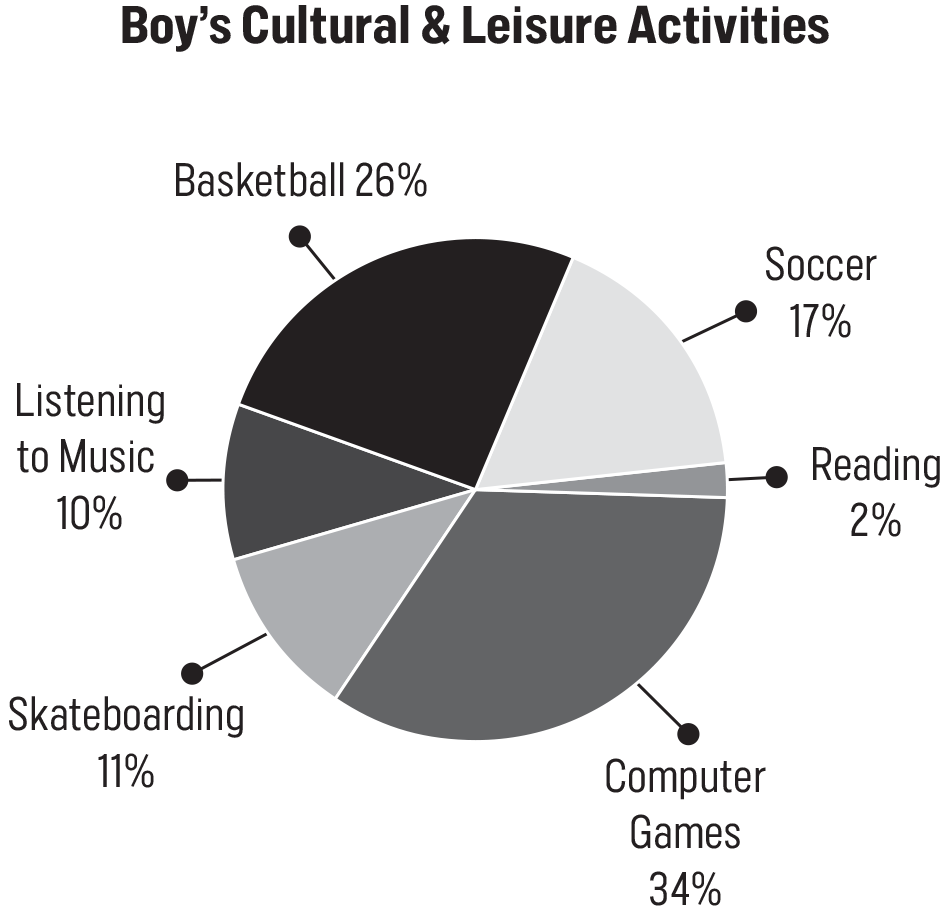
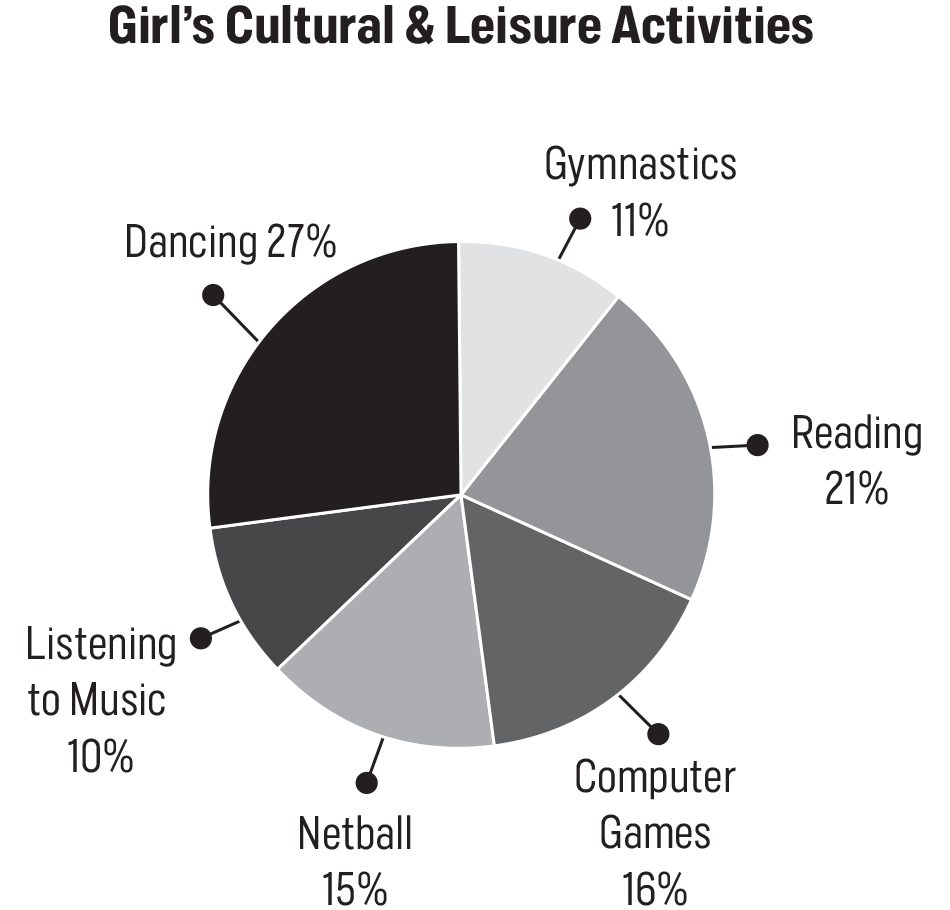
The pie graphs below show the results of a survey of children's activities. The first graph chaws the cultural and leisure activities that boys participate in, whereas the praph chows the activities in which girls participate.
Summarise the information by selecting and reporting the main features, and make comparisons where relevant.
Boy's Cultural & Leisure Activities
Girl's Cultural & Leisure Activities
Writing Task 2
The world is experiencing a dramatic increase in population. This is causing problems not only for poor, undeveloped countries, but also for industrialised and developing nations.
Describe some of the problems that overpopulation causes, and suggest at least one possible solution.
Give reasons for your answer and include any relevant examples from your own knowledge or experience.
- Introduction: Paraphrase the question and state your position
- Body Paragraph 1: Describe problems (environmental, economic, social)
- Body Paragraph 2: Suggest solutions with examples
- Conclusion: Summarize main points and give your opinion